Reason 1.
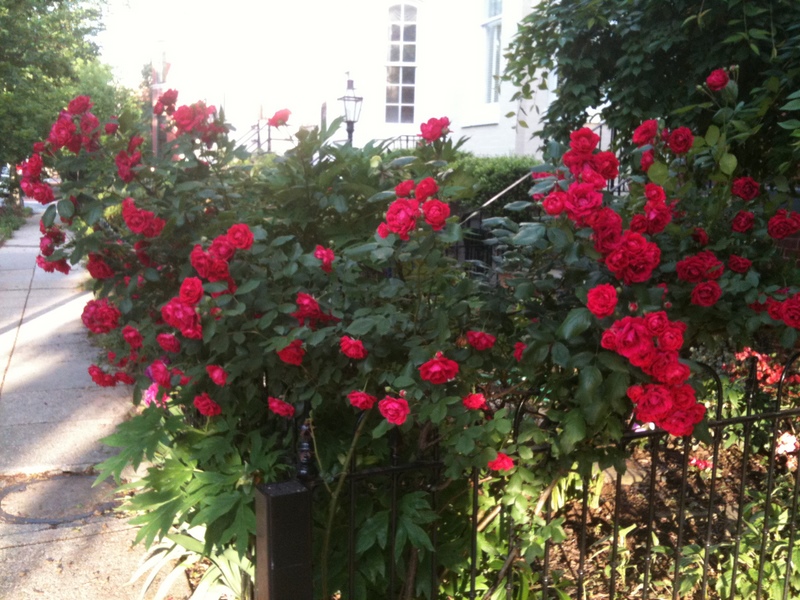
Because my walk home after yoga loks like this:
And I can pour my soul into the heady essence of roses and peonies while the wind whispers its secrets to the trees.
Tuesday, May 17, 2011
Wednesday, May 11, 2011
Bread
On a recent Saturday morning, I was lying in bed thinking about French toast, thinking that the only bread I likely had was a few slices of multi-grain packaged bread. This type of bread is fine for the occasional piece of toast or a quick, cheap lunch of peanut butter and jelly but it wasn’t really living up to my morning dream of rich, satisfying French toast. I don’t eat a lot of bread as it’s been stigmatized as a bad carb. I’ll never give up pasta and still favor white rice over brown, especially aromatic grains like jasmine or basmati, but I can pass on bread. I was raised eating white bread before it was deemed the “most evil” of all. I still think it makes the best pimento cheese sandwiches.
I suddenly remembered the three loaves of bread I just brought home from a bread making demonstration: gorgeous artisanal ciabatta, a baguette, and an asiago boule. The class held in the Pyramid Atlantic art space in Silver Spring was excellent. The class was scheduled for 6:30; it was a quick walk from the metro so I could still get there after leaving work downtown at six. Seated right in the gallery with eye-catching art hanging all around the creative energy was palatable. We faced tables piled high with different types of bread.
Poolish is made from equal parts flour, water, and a little yeast. The recipe from the class calls for 8 oz of water, 8 oz of flour, and 1/8 teaspoon instant yeast. As with all baking it is better to weigh the dry ingredients than measure them. Cover and rest for 12 to 24 hours.
| French toast cooking |
| French toast with marmalade |
I suddenly remembered the three loaves of bread I just brought home from a bread making demonstration: gorgeous artisanal ciabatta, a baguette, and an asiago boule. The class held in the Pyramid Atlantic art space in Silver Spring was excellent. The class was scheduled for 6:30; it was a quick walk from the metro so I could still get there after leaving work downtown at six. Seated right in the gallery with eye-catching art hanging all around the creative energy was palatable. We faced tables piled high with different types of bread.
Our instructor Rod Teel of Crest Hill Bakery, lead us through a thorough yet fast-paced lesson in the proper technique of making good artisanal bread. He comforted us all with reassurances that learning to make really good bread is a slow process that requires practice, so if you don’t get it right the first time, just keep trying. The ultimate in Slow Food, he starts at least the day before so that the poolish has adequate time to rest.
| Baker Teel |
I discovered my own bread making struggles come from two sources. One is insisting on trying to use temperamental traditional yeast when invariably my water is a degree too hot or too cold for the yeast to bloom. Two is what I think most people struggle with, and that is a tendency to over work the dough. We have these images of a short, barrel shaped granny in a flowered apron working out her domestic aggression in kneading the dough. This could not be more wrong. You must be gentle with the dough, fold it like tucking in a baby for a nap.
| If you are waiting on dough, it is important to have lots of snacks. |
When you are ready to make the dough, loose the polish from the bowl by pouring water around the edge of the bowl, about 1 cup. Add a pound of flour, 2 ¼ teaspoon kosher salt, and 1 teaspoon instant yeast.
Cover and let it ferment for 45 minutes.
Turn the dough by folding it into thirds, rotate 90° and fold into thirds again. This is when it is helpful to see a professional baker in action. Preheat the oven to 475° with a baking stone inside. He recommends including a cast iron skillet filled with lava rocks on a lower rack. This gives you a mechanism to create the stem needed to form a perfect crust encasing soft airy pleasure on the inside.
Cover and let ferment for 45 minutes again. If the dough was mixed by hand, “turn” the dough again and let it rest for another 45 minutes. Divide the dough into the shapes you desire. Bench resting in between each action.
Slide bread directly onto oven stone. Pour a cup of boiling water into the skillet with utmost CARE!! Steam burns occur quickly and are very nasty. Use oven mitts and hold your face back. Adjust oven temperature to 425°F. Close the oven door and don’t open it for at least 10 minutes.
Bread is done when the desired color is achieved, and internal temperature is 205°F.
So now through the generosity of Baker Teel, I am enjoying proper French toast for breakfast and I will pack sandwiches of jamon, the first freshly picked lettuces from the back, and a thin spread of grain mustard and tomato mayo to take to the azalea gardens. I will not begrudge one bite of these wonderful carbs just as I will always appreciate a good pimento cheese sandwich on white bread.
| Jamon sandwiches in the making |
| Homegrown lettuces |
Tuesday, May 10, 2011
A bit of advice
If you decide to make strawberry orange muffins because you have had a bad day, it is a good idea to wait until you finish roasting garlic and eggplant. The aromas just don't mix well and the garlic will possibly seep into your muffins. If I am going to have a bad day I like to go full on....
Scratch that the muffins are just fine and the melted buttery flavor of strawberries baked inside a golden crust muffin does help ease the stress of jury duty.
Tuesday, April 12, 2011
Paella: The joys of peasant food.
So many wonderful dishes from around the world are not from fancy high end restaurants but are the food of the people. Simple ingredients of good quality blended together with care and attention produce bright fresh flavours through time and heat meld into deeper complex flavours.
Paella is a regional Spanish rice dish, similar to a pilaf cooked over an open fire, saffron. Coastal areas would of course add seafood; inland chicken and sausage would provide the protein. A very traditional version uses rabbit and snails. These two ingredients are likely to be found only in higher-end restaurants in America but in other parts of the world have been savored by villagers for centuries.
| monkfish |
This particular evening my friend Patrick invited a small group over for Sunday supper, paella with mussels and monkfish. Monkfish also known as poor man’s lobster is a wonderful inexpensive fish. Whole it is very ugly with a face that would scare babies but skinned and filleted it cuts into delicious, buttery, sweet chunks of flesh that holds up well in this kind of cooking. The mussels like all shell fish bring a taste of the sea with a salty brine from the juices but sweet meat.
| Sofrito |
The base of paella is sofrito and rice. Sofrito is finely diced onion, bell pepper, and garlic mixture sautéed in a little oil until melded. This flavor profile reminds us of the Spanish influence in Cajun cooking. The rice must be short grain to absorb the liquid and give the plump texture desired. The best rice to use for this is calaspara.
A good broth is equally important to bring out the richness but this is the case with so many foods. Start with a good base, boiled down from the things so many people take for granted and discard: shrimp shells, vegetable scraps, meat bones, whatever is appropriate for the end result.
The broth is added all at once, perhaps after a splash of wine. And then you wait for the right balance of absorption for the rice to soften and plump. Paella is cooked in a low-sided and a broad pan to distribute the heat evenly, encouraging a crunchy soccorat crust, outside over a fire. Trying to get the heat source just right can be tricky and we used a combination of stove top to get things started with the sofrito before moving out side to sit in the lilac scented air.
| Broth |
| Spanish Smoked Paprika |
| Add seafood close to the end of cooking |
Deepened with pinches of saffron and smoked paprika the two essential indulgences of the dish, fennel, salt and pepper. Green peas and roasted red pepper bring a bright freshness to round out the meal. We sat around the pan eating communally, happily lit by candlelight and conversation. This instance of paella party did not result in the desired crispy bits on the bottom but personally I am happy to eat as much paella as it takes to get it just right.
Monday, April 11, 2011
Time
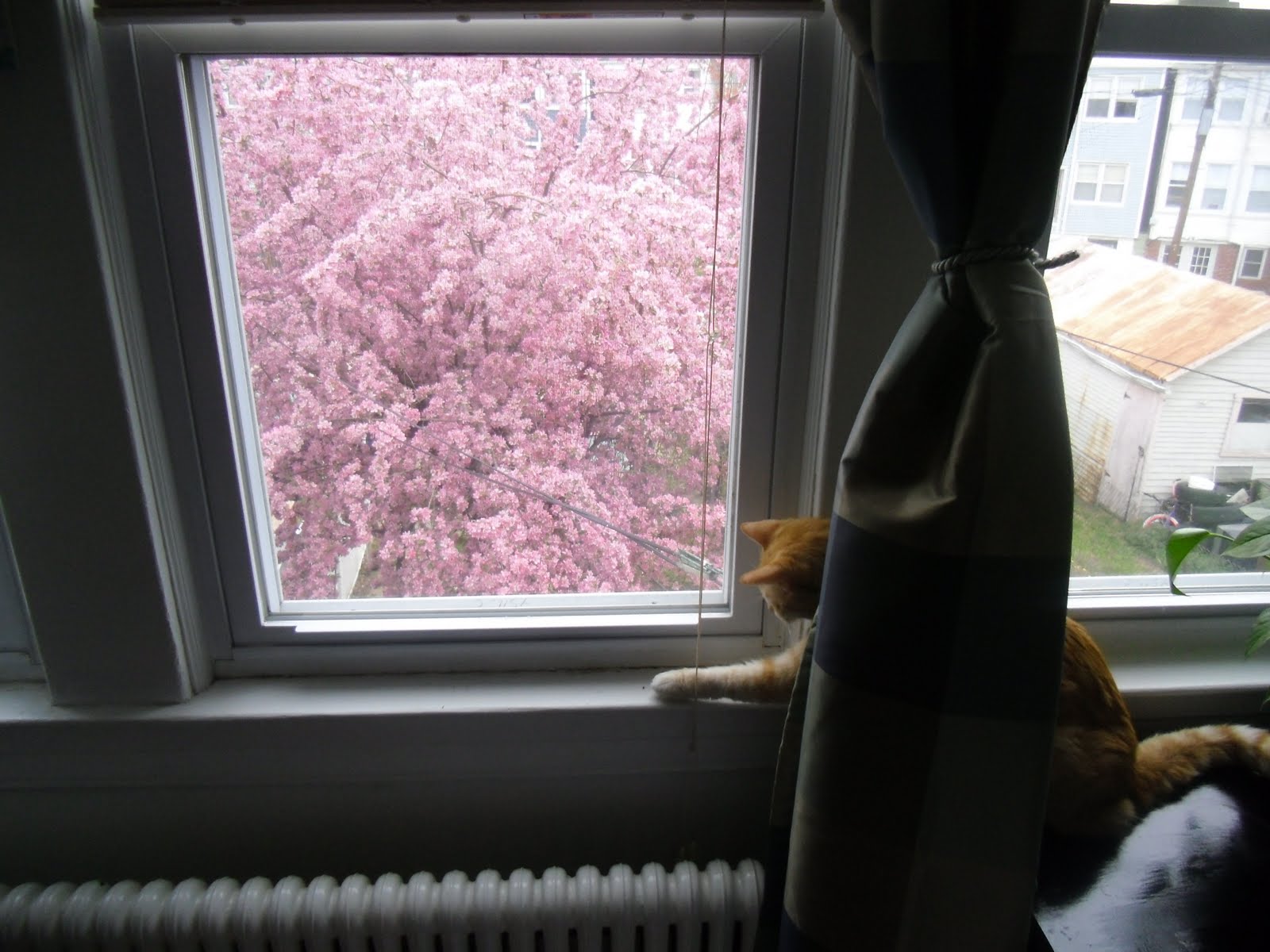
A quarter of the year has already passed. The crab-apple tree outside my window is in full bloom with beautiful bursting pink blossoms serves as a reminder of fleeting time. The petals will fall like snow as the season shifts from spring to summer. My resolution to try something new each month has progressed from starting a blog in January, fixing a lamp in February, March I took two new trips: the bus to New York and then my first Amtrak experience to Raleigh. The trips are their own posts waiting to be written. April is still open, although only a few weeks remain. Any suggestions?
| City Wildlife |
One of the challenges of trying new things is that unless it is a one-time experience like visiting New York, on-going projects become one more item to juggle in a limited amount of time. But it is a good exercise for me to try and stick with it even if I don’t write as frequently as I had set out to do. It forces me to let go (a little) of delaying until it is just right.
Meditation, walks, leisurely meals with friends, Saturday afternoon naps with Kasmir help keep me in the present. I suppose we are all seeking a balance, searching for ways to be appreciative of the moment so as to not be carried away with anxiety for the future.
Thursday, March 31, 2011
Crepes
My intention for this blog was never a "how to" or a compilation of recipes. However, a family visit and an old pear led to the creation of this crepe video. This one is for you Aunt Joan. Plus I got to try out the video feature on my new camera, which by the way isn't easy to use and cook at the same time by yourself.
Standard crepe batter recipes can be found in a variety of places so I won't repeat one here. Most tell you to let the batter sit before cooking. it keeps in the fridge for several days. If it separates just stir it back together.
At a recent family visit we were discussing how to make crepes. The way I was taught is that you want a lightly greased pan, i.e. I only butter it for the first crepe (which usually isn't the best one) and that's enough to get you through a batch. It is also really important to swirl the pan, so you get good coverage, and pour out the excess batter so that you get the desired thinness of a crepe. You can tell when it is time to flip, similar to pancakes, when the edges are just lightly brown or beginning to cook. It is easier to show, hence the video, although I haven't quite mastered flipping one-handed.
Perhaps I will learn to edit the video next time...
A pear that had been hanging around a little too long was calling out to me to be sauteed in butter, so on a recent Saturday morning I made crepes. Cooking crepes can be done so quickly they should definitely be made more often. As I slid the buttery browned pears, their over-ripeness only adding to the carmelization, into the crepes a second wave of inspiration struck. I am such a lucky girl to have beautiful homemade marmalade waiting in my cupboard. Thanks Rich! Adding a spread of of this amber deliciousness brought just the right balance of tartness to the sweetness of the pear and a little bit of texture. I guess if everyday started this way it wouldn't be appreciated as much, at least that's what I am telling myself. Plus I get to feel good about using up an old pear.
Standard crepe batter recipes can be found in a variety of places so I won't repeat one here. Most tell you to let the batter sit before cooking. it keeps in the fridge for several days. If it separates just stir it back together.
At a recent family visit we were discussing how to make crepes. The way I was taught is that you want a lightly greased pan, i.e. I only butter it for the first crepe (which usually isn't the best one) and that's enough to get you through a batch. It is also really important to swirl the pan, so you get good coverage, and pour out the excess batter so that you get the desired thinness of a crepe. You can tell when it is time to flip, similar to pancakes, when the edges are just lightly brown or beginning to cook. It is easier to show, hence the video, although I haven't quite mastered flipping one-handed.
Perhaps I will learn to edit the video next time...
A pear that had been hanging around a little too long was calling out to me to be sauteed in butter, so on a recent Saturday morning I made crepes. Cooking crepes can be done so quickly they should definitely be made more often. As I slid the buttery browned pears, their over-ripeness only adding to the carmelization, into the crepes a second wave of inspiration struck. I am such a lucky girl to have beautiful homemade marmalade waiting in my cupboard. Thanks Rich! Adding a spread of of this amber deliciousness brought just the right balance of tartness to the sweetness of the pear and a little bit of texture. I guess if everyday started this way it wouldn't be appreciated as much, at least that's what I am telling myself. Plus I get to feel good about using up an old pear.
Monday, March 28, 2011
Lessons from dogsitting
1. Kasmir is too scared of dogs to come out from under the bed to remind me how hungry he is at 5am.*
2. If you get up and out early and enough on a Saturday you might just see people finishing a marathon.
3. naps and treats are to be enjoyed by everyone
4. It is easier to fit in at the dog park if you actually have a dog
5. A great thing about living in DC is that you don't have to fight the hoards of tourists to see beautiful cherry blossoms, just go for a walk with a companion that must sniff every spot a dog before him has marked.
6. It takes good timing if you must first intently smell the lamp post and then sit before crossing the street and make the cross walk light.
7. Even though every pet I have ever had, has been untrained and spoiled perhaps I do have the discipline it takes if I can make Fozzie sit every time before crossing the street.
8. Homemade broth heartens the appetite homesick dogs and people alike.
*At least for one night.
Another reason to love Lincoln Park in the spring is that you never know what you will see including a girl in braids and a skirt playing catch with her dad, a man simultaneously rollerblading and smoking a cigar, kids hiding in a tree just like I did. Although pretending you are a spy in a tree I imagine is much easier to do in a city park than in a suburban neighborhood with no one else around to spy on.
If spring has sprung, can someone please remind March it's supposed to exit like a lamb? In my mind that does not mean more snow.
2. If you get up and out early and enough on a Saturday you might just see people finishing a marathon.
3. naps and treats are to be enjoyed by everyone
4. It is easier to fit in at the dog park if you actually have a dog
| Fozzie makes new friends |
5. A great thing about living in DC is that you don't have to fight the hoards of tourists to see beautiful cherry blossoms, just go for a walk with a companion that must sniff every spot a dog before him has marked.
6. It takes good timing if you must first intently smell the lamp post and then sit before crossing the street and make the cross walk light.
7. Even though every pet I have ever had, has been untrained and spoiled perhaps I do have the discipline it takes if I can make Fozzie sit every time before crossing the street.
8. Homemade broth heartens the appetite homesick dogs and people alike.
*At least for one night.
Another reason to love Lincoln Park in the spring is that you never know what you will see including a girl in braids and a skirt playing catch with her dad, a man simultaneously rollerblading and smoking a cigar, kids hiding in a tree just like I did. Although pretending you are a spy in a tree I imagine is much easier to do in a city park than in a suburban neighborhood with no one else around to spy on.
If spring has sprung, can someone please remind March it's supposed to exit like a lamb? In my mind that does not mean more snow.
Subscribe to:
Posts (Atom)